
Abstract:
Background: Natural products remain a rich source of therapeutic and agrochemical agents, with their structural diversity largely arising from specialized biosynthetic enzymes. Mildiomycin is an N-nucleoside-derived antifungal natural product produced by Streptoverticillium rimofaciens and is widely used to control powdery mildew diseases. MilM, a pyridoxal-5′-phosphate (PLP)-dependent enzyme from the mildiomycin biosynthetic pathway, was previously annotated as an aminotransferase but has recently been identified as an L-arginine oxidase/cum C-hydroxylase. However, the molecular basis of its catalytic activity, substrate recognition, and oligomerization requirement remained unclear.
Objective: To elucidate the catalytic mechanism of MilM, identify the active-site residues governing substrate and cofactor interactions, and determine the role of homodimerization in catalysis.
Methods: Recombinant MilM from S. rimofaciens B-98891 was investigated using biochemical and biophysical characterization, UV-visible spectroscopy, isotope-labeling experiments, site-directed mutagenesis, LC-MS analysis, structural modeling, and molecular dynamics (MD) simulations. These complementary approaches were employed to define catalytic intermediates, identify essential residues, and characterize conformational dynamics associated with substrate binding and product release.
Results: MilM was shown to function as a stable homodimer and required both PLP and molecular oxygen for catalytic activity. The enzyme converted L-arginine into 5-guanidino-4-hydroxy-2-oxovaleric acid and 5-guanidino-2-oxovaleric acid while generating hydrogen peroxide and ammonia as reaction by-products. UV-visible spectroscopy supported the formation of quinonoid intermediates, whereas inhibition by superoxide dismutase suggested the involvement of a superoxide radical anion during catalysis. Isotope-labeling experiments demonstrated that the hydroxyl oxygen incorporated into the product originates from solvent water rather than molecular oxygen, establishing MilM as an oxidase/hydroxylase rather than an oxygenase. Mutagenesis, structural modeling, and MD simulations identified Lys232 and His31 as key catalytic residues and revealed an extensive active-site interaction network involving residues from both protomers. Furthermore, MD simulations uncovered a dimer-mediated alternating-lid mechanism in which coordinated motions at the dimer interface regulate substrate access and product release through transient tunnels while maintaining a protected catalytic environment.
Conclusion: This work establishes dimerization as a critical determinant of MilM function and provides comprehensive mechanistic insights into a rare class of PLP-dependent oxidase/hydroxylases involved in natural product biosynthesis. The findings advance our understanding of enzymatic diversification in secondary metabolism and provide a foundation for future enzyme engineering and pathway redesign to generate mildiomycin analogues and other valuable bioactive natural products.
Biography:
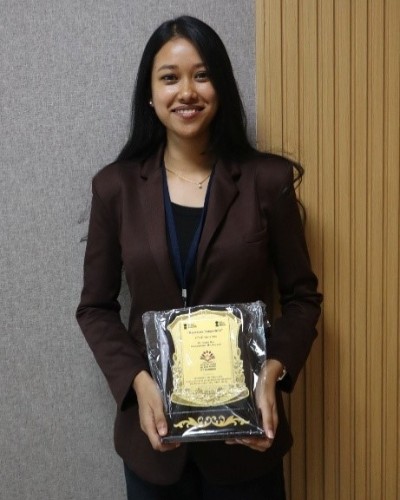
Simita Das is a PhD candidate in the Department of Chemistry at IIT Dharwad, India, under the supervision of Dr. Nilkamal Mahanta. Her research focuses on the biochemical characterization of enzymes involved in natural product biosynthesis, with particular emphasis on antimicrobial. She completed her M.Sc. in Applied Chemistry from the NIT Silchar. She has authored publications in leading journals, including Nature Chemical Biology, and has received several awards for oral and poster presentations at national and international conferences. Her current research aims to uncover new enzymatic transformations and expand the understanding of microbial natural product biosynthesis for future therapeutic and agricultural applications.
Copyright 2024 Mathews International LLC All Rights Reserved
