
Abstract:
The marine environment remains underexplored compared to the terrestrial environment. Indeed, limited accessibility and resources contribute to this situation. In Pacific islands, people are highly dependent on marine resources, particularly fish and shellfish. Fishing is mainly carried out for food purposes, including the harvesting of sea cucumbers. On average, 50 species are exploited for the Asian luxury food market. However, overfishing of these animals has led to the collapse of wild stocks. As a result, mariculture has been developed as an alternative to wild harvesting. In French Polynesia, Tahiti Marine Products (TMP) is developing the aquaculture of Holothuria fuscogilva. Their main objective is to produce high-value-added products, such as nutraceuticals and cosmetics. The metabolites of interest include saponins, chondroitin sulfate, and collagen. Collagen extraction is commonly performed using proteolytic enzymes, particularly pepsin, bromelain, and papain. In this study, we investigated the extraction of collagen from H. fuscogilva. The effectiveness of pepsin-, papain-, and bromelain-assisted hydrolysis for collagen extraction was compared. Subsequently, the optimal conditions for pepsin-assisted extraction were determined using a three-factor Box–Behnken (BB) experimental design and response surface methodology (RSM).
Optimization of pepsin hydrolysis conditions using the BB experimental design involved 15 experimental runs. The highest yield (72%) was obtained at 40°C after 3 days of extraction using 2% pepsin. The RSM analysis showed that extraction yield was strongly influenced by both temperature and enzyme concentration and predicted optimal conditions of 12°C, 53 h, and 8% enzyme concentration (equivalent to 20,000 U/mg). Our findings highlight the importance of low temperatures and high enzyme concentrations in improving the efficiency of pepsin-assisted hydrolysis during collagen extraction. This process enables TMP to produce collagen through an environmentally friendly extraction process conducted in an aqueous medium, providing high efficiency, low cost, and reduced environmental impact.
Biography:
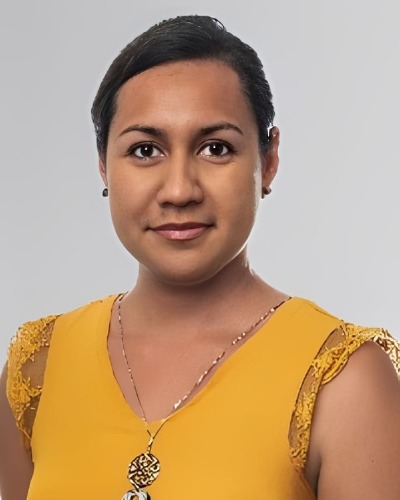
Dr. Tepoerau MAI is a young researcher in Organic Chemistry specialized in the extraction and analysis of natural products from tropical organisms. She holds a PhD in Organic Chemistry from Université de la Polynésie française (2016-2012) and an MPH from Université de Reims Champagne-Ardenne (2012-2011). Dr. Mai has experience in the field of marine natural products, particularly those derived from tropical marine sponges and microalgae. Her research achievements led to her receiving the L’Oréal–UNESCO For Women in Science Award (2022) and the Sue Taei Ocean Fellowship (2021). For the past three years, she has been working at the Institut Louis Malardé, where her research focuses on the valorization of marine and terrestrial organisms from French Polynesia. She also holds the position of Assistant Laboratory Manager at the Laboratory of Natural and Medicinal Substances.
Copyright 2024 Mathews International LLC All Rights Reserved
